

Sibling dispute
The most important facts about arguments between siblings at a glance
- An argument between siblings is normal and part of healthy development.
- When children argue, they learn important skills such as empathy, assertiveness and conflict resolution.
- Not every argument needs parental intervention.
- An intervention is only necessary if the argument escalates, becomes unfair or hurtful.
- Calmness helps: staying calm, not judging immediately, naming feelings and letting children find solutions are good strategies for settling disputes.
- Fair instead of equal: Children don't have to get everything equally. The important thing is that they feel they are treated fairly.
- Frequent arguments do not mean that parents are doing something wrong, but that children are developing social skills.
- Parents can get free help with long-term stressful conflicts, e.g. from parenting advice centers and the parent helpline.
Settling a sibling dispute: What really helps?
Sometimes it's about a toy, sometimes about attention, sometimes about "unfair" treatment: arguments between siblings are part of everyday family life. This is often stressful for parents, but conflicts are normal and even an important part of development. But why do siblings argue so often? What is the best way for parents to deal with it and when should they intervene? Here you will find tips on how to deal calmly with arguments.

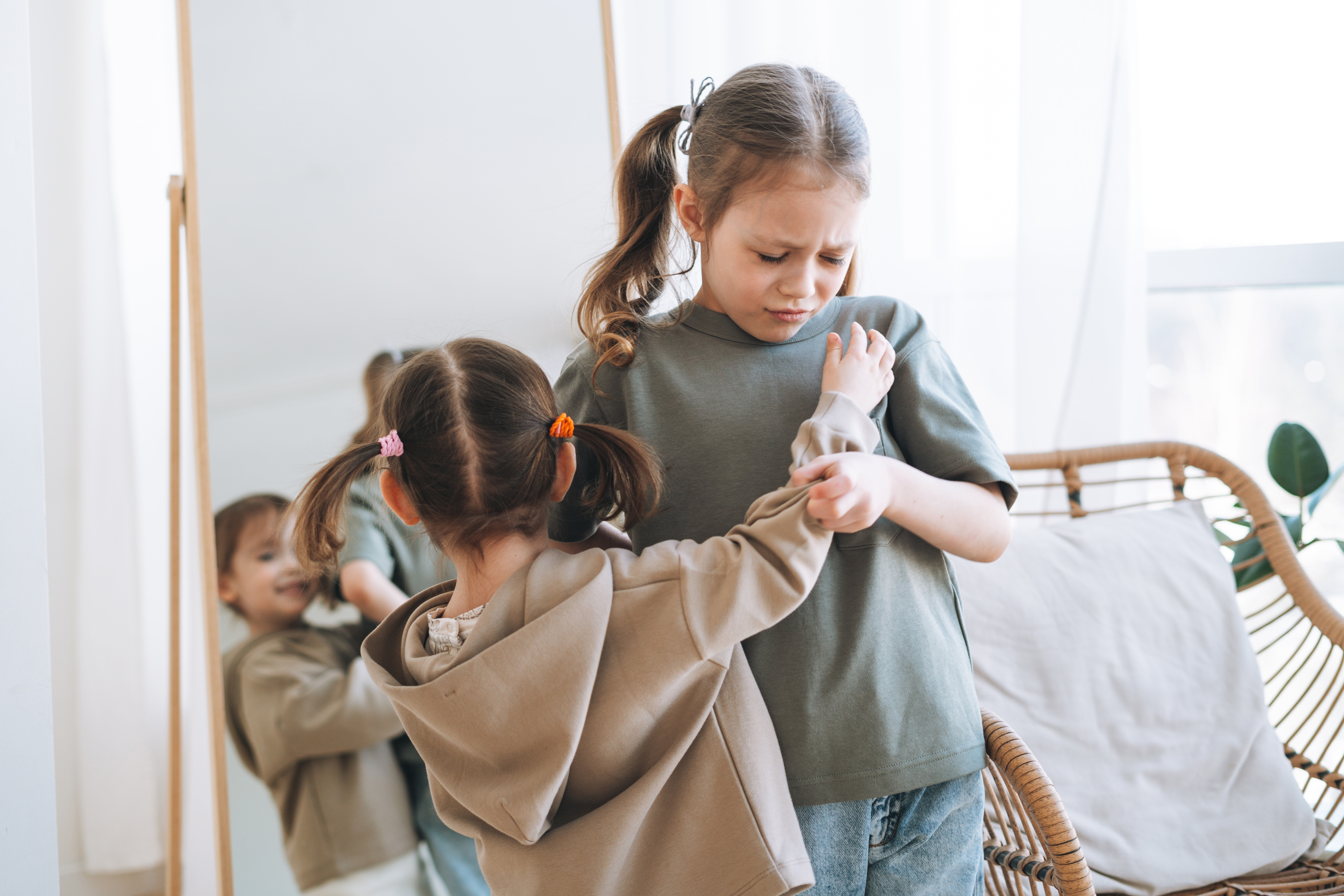
Why do siblings argue so often?
Siblings spend a lot of time together: they share the home, the toys, their parents' love. In addition, there is the constant comparison between the children. It's no wonder that the mood quickly changes when playing or at the dinner table: "But that's mine", "Karem can do that and I can't"; "Lilli pulled my hair", "You like Luca much better than me." Much of this will sound familiar to you as parents.
Fights between siblings are often about little things. The most common triggers are conflicts over possession of toys, the favorite spot on the couch or competition for the parents' attention. And sometimes hunger, tiredness or stress are added to the mix, which escalate the argument.
Parents should know, however: Frequent arguments are not a sign of bad parenting, but a normal part of development. Frequent arguments are also not a sign that siblings don't like each other. Many children argue several times a day and after five minutes everything is forgotten again. Sibling love grows through friction and the bond in adulthood is often particularly close and trusting.
Why is sibling conflict an important part of development?
Even if the constant bickering can be annoying: Siblings learn how to deal with conflict. This has an important learning effect for growing up.
Children learn by arguing:
- to describe their own needs,
- to develop compassion,
- resolve conflicts,
- find compromises,
- to assert yourself and give in,
- to endure frustration,
- to internalize social rules.
How do parents react calmly to arguments?
It is not important to avoid an argument. It is much more important to accompany the situation well. This enables children to learn how to deal with conflicts. They benefit from being encouraged to find solutions themselves. An argument therefore does not always need the intervention of parents. The argument often resolves itself and shortly afterwards the siblings are laughing together again.
Younger children generally need more parental guidance, but from primary school age onwards, children are increasingly able to develop their own solutions.
When should parents intervene?
It is necessary to intervene if the dispute gets out of hand. Especially when
- a weaker child is systematically marginalized and unable to protect themselves,
- the conflicts become more intense,
- a child is physically or emotionally hurt,
- there is a clear power imbalance
- or a child is permanently sad or anxious and withdraws.
It is very important to stay calm - even if you find it difficult. Parents are role models and children take their cue from their parents' reactions. Staying calm is the best way to defuse the situation.
When does professional support make sense?
There are situations in which parents should get help:
- when the argument is constantly escalating,
- when a child is regularly oppressed,
- in the event of physical violence,
- if you feel permanently overwhelmed as a parent.
Seeking help is not a sign of weakness, but of parental responsibility. You can make use of the free services offered by the advice centers confidentially and anonymously.
10 tips for parents: How to settle disputes without scolding
Where can I get help and advice?
If you feel overwhelmed or realize that you need support, there are many services and advice centres in North Rhine-Westphalia:
- Counselling at parenting and family advice centres is free and confidential.
- Family centers and youth welfare offices also offer support in everyday parenting and advice on site.
- Family education centers often offer courses and parent training.
You can find contact points in your area via Mein Famillienlotse.
The parents' helpline (Nummer gegen Kummer) can be reached anonymously and free of charge on 0800 111 0 550 or online at www.nummergegenkummer.de.
You might also be interested in


Further information Links to read more