

Tips for a safe sleeping environment
How parents of infants ensure safe sleep
How blissful babies look when they sleep peacefully! But is your baby really sleeping well? A safe sleeping environment is very important, especially in the first few months of life, for example to prevent sudden infant death syndrome. But other health problems can also be avoided through sensible prevention. Read what you can do to help your child sleep well.

Understanding breathing sounds
Does your baby sleep quietly, snorting, gasping or almost imperceptibly? This is all normal. Babies breathe mainly through their nose for the first six months. Mouth breathing only develops gradually.
If you are unsure whether your baby is breathing properly, you can place your hand on the chest and feel how the little chest moves up and down. To do this, you can place your cheek or the back of your hand on the nose and mouth and feel whether you can feel the draft from the breath and also listen to whether you can hear any breathing noises.
Experts believe that various factors can come together to cause respiratory arrest. Very often, affected babies are unable to breathe freely through their nose. A prone position can be responsible for this. However, overheating due to excessively warm clothing or excessively heated rooms are also considered risk factors, as is smoking in the home.
In the following, we describe measures that you can take to prevent the risk of sudden infant death syndrome:
10 recommendations for safe and healthy baby sleep
In the first few months of life, babies spend up to 19 hours a day sleeping. Parents can avoid dangers when sleeping in the crib if they follow a few rules.
-
-
Supine position
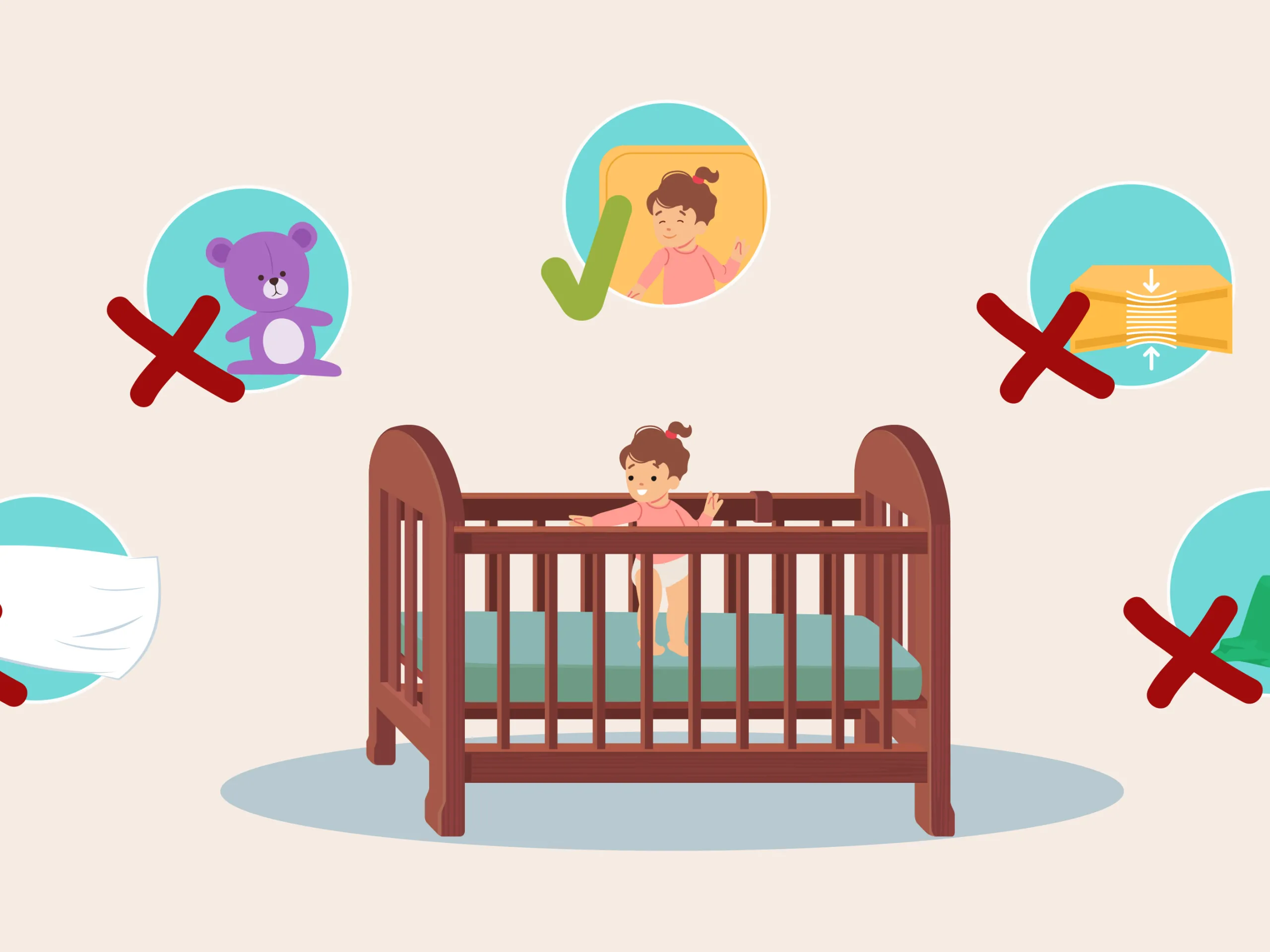
The supine position is recommended for safe sleep. Lying on your back allows your baby to breathe freely
.
-
Stable base
Use an air-permeable, firm mattress in the crib. Underlays that allow your baby to sink in are unsuitable as they can hinder breathing.
-
Choking risk pillow
Your baby does not need a pillow in the first few months. This poses a risk of suffocation, so you should definitely do without it.
-
Use sleeping bag
Use a baby sleeping bag instead of a pillow and comforter. This way, there is no risk of it slipping under the blanket. What's more, the sleeping bag prevents them from kicking themselves free at night or getting cold.
-
No cuddly toys
For the first few months, avoid cuddly toys, cuddly blankets, sheepskin or crib bumper. Anything that could hinder breathing should be avoided.
-
-
No small parts
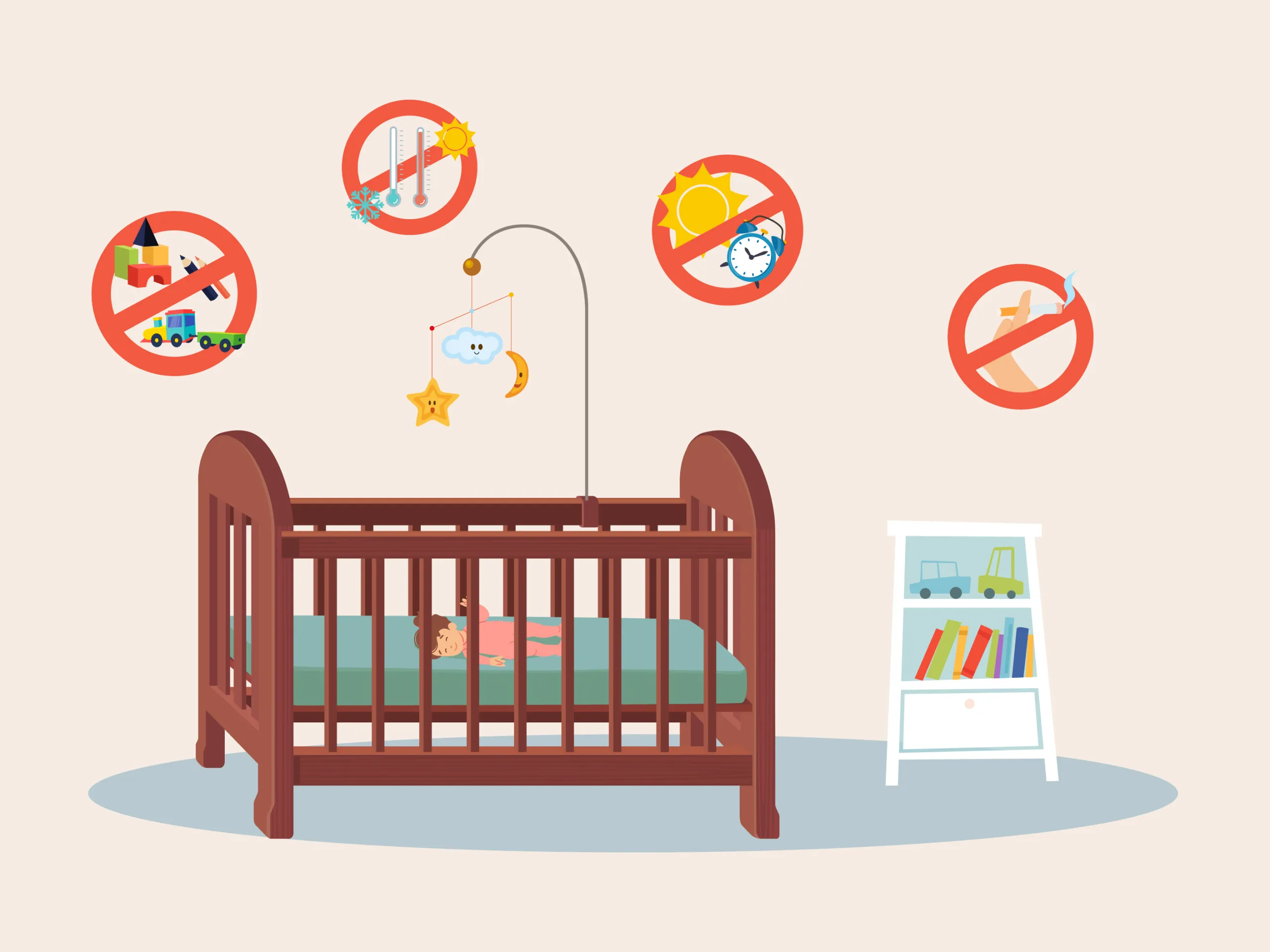
Do not leave any cords or small parts that can be swallowed in the crib.
-
Pleasant room temperature
Avoid overheating: A normal room temperature of approx. 17 to 18 degrees and light pyjamas are completely sufficient in the sleeping bag. Check whether your baby is sweating and dress them more lightly if necessary.
-
Distance from heat sources
The crib should not be placed in the sun or next to a heater, as there is a risk of overheating here too.
-
Baby crib instead of parents' bed
Studies have shown: Babies sleep more safely in their own crib than in their parents' bed. If you place the crib next to the parents' bed for the first few months, you will still have it close to you.
-
Refrain from smoking
Do not smoke in the living area. Smoking is also considered a serious health risk for babies in connection with sudden infant death syndrome.
Caution: Falling asleep with a child is particularly dangerous!
Never sleep with your baby on sofas, armchairs or cushions. It is particularly dangerous if you fall asleep with your child in your arms because you are so tired. If your baby lies with its stomach on your chest, the risk of sudden infant death syndrome or suffocation increases. If you feel so tired that you are about to fall asleep, you should put your child in their basket or crib.
Resuscitation if your baby is breathing irregularly or not breathing at all
If you notice that your child is breathing irregularly or is in respiratory arrest, you should call the emergency services immediately on 112. As a parent, it is important to know how to perform resuscitation in such an emergency.
The German Red Cross offers first aid courses for child emergencies aimed at parents, grandparents and interested parties. These courses provide an insight into the initial care of your child in this exceptional situation so that you can act calmly and correctly in an emergency.
Online information on cardiopulmonary resuscitation for infants and young children can be found on the German Red Cross website.
In the video, the University Hospital Bonn explains step by step the correct resuscitation procedures for infants and children to bridge the time until the emergency services arrive.
Where can we find help and advice?
If your child has sleeping problems, you have questions about a safe sleeping environment or are worried, talk to your pediatrician's office.
The pediatricians on the net provide online information on prevention and tips for first aid in emergency situations.
The Gemeinsame Elterninitiative Plötzlicher Säuglingstod e.V.(GEPS) offers affected parents help in coping with grief and in subsequent pregnancies.
The GEPS also organizes and arranges infant resuscitation courses and holds parent meetings. Information material and recommendations for prevention are available to download free of charge. This parents' initiative also offers the opportunity to discuss this topic with others in the free GEPS discussion forum. All you have to do is register on the site.
Further information Links to read more

TIPS TO DOWNLOAD
