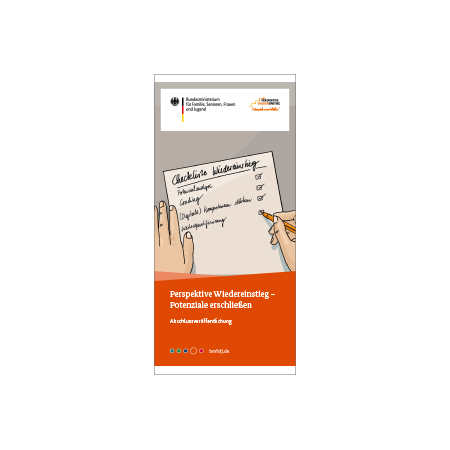

Re-entry into working life
"A decisive factor is the right attitude and culture in the company"
Returning to work after a long break is an exciting and challenging process. Conditions in both private and professional life have often changed significantly. How can companies benefit from their employees returning to work and make it easier for them to get started? An interview with Susanne Möcks-Carone, Chief Transformation Officer and mentor for career changes and re-entry, provides information.

Mrs Möcks-Carone, what potential do people returning to work bring with them?
Not all returners are the same. Some return from parental or care leave, others have taken some time off to travel, for example. Others have been off work for a long time due to illness or are returning from retirement. Re-entry can mean that the person returns to their old company or starts at a new company. What all options have in common is that a new professional phase begins.
Returnees are specifically looking for a new job and therefore usually bring a lot of determination and motivation with them. This is particularly the case if they have had a period of reflection of their own choosing or can make a decision without economic pressure. Even those returning from parental leave or a period of illness are often much better organized than before - because they have to be. It is now important to find a good balance between professional and private demands. For example, the mother or father has to leave on time at 5 p.m. to pick up the child. Fortunately, I have often found that these employees work much more effectively in the time available.
How has the attitude towards people returning to work in companies changed in recent years?
In the past, there was often a lack of understanding for individual time and working models in companies and among colleagues. If someone had to leave on time or wanted to work remotely to do care work or take on private tasks, this was sometimes met with a lack of understanding, especially in conflict-ridden working environments. This particularly affected those returning to work, as they are more likely to have other roles and commitments in addition to work.
Nowadays, companies are much more open-minded and willing to compromise. There has definitely been a development.
In spite of this, the topic of re-entry in companies still falls by the wayside far too often, instead of being a natural part of personnel development or recruitment. Employers who make re-entry an important part of personnel development, communicate accordingly and explicitly demand support from management teams are acting in an exemplary and motivating manner. Best practice in a company can become a role model for other companies and have a positive impact on reputation.
In your opinion, what else is important for employers to ensure a successful return to work?
This starts with an open, sympathetic discussion with the person returning to work in order to clarify the expectations and opportunities on both sides. This openness helps to avoid nasty surprises afterwards.If both parties decide to work together, the employer should provide good support and the right framework conditions.
We conducted the interview with Susanne Möcks-Carone in 2021.
Good company examples from practice


Where can we find help and advice?
The German Trade Union Confederation offers lectures, workshops and advice for companies on various reconciliation topics:
Further information Links to read more

Brochures Download