

Pregnancy Progression
Everything You Need to Know About the Course of Pregnancy at a Glance
- A pregnancy lasts about 40 weeks and is divided into three trimesters.
- During the first trimester, the mother’s body undergoes hormonal changes. The embryo develops vital organs.
- During the second trimester, many women feel physically stable and more emotionally balanced. The first movements can be felt.
- In the third trimester, the mother and baby prepare for birth.
- Every pregnancy is unique. Physical changes and emotional mood swings are normal.
Is the pregnancy test positive? Then a special time is about to begin!
Expecting a baby? Congratulations! One thing is certain: With the start of your pregnancy, an exciting time lies ahead. Nine months is a long time, filled with emotional ups and downs, many heartfelt moments, and growing anticipation. Here’s an overview of how an expectant mother’s body changes, how the unborn child develops, and what happens during each stage of pregnancy.


What happens during pregnancy?
Pregnancy is divided into 3 major stages. These are called trimesters:
- 1st trimester: Pregnancy weeks (PW) 1–12
- 2nd trimester: weeks of pregnancy (WOP) 13–28
- 3rd trimester: weeks of pregnancy (WOP) 29–40
This division helps to understand the baby’s development and the mother’s physical changes. Each trimester brings its own physical, emotional, and developmental characteristics.
In this article, you’ll learn what to expect during pregnancy and what the most important milestones are.
A New Life Begins: What Happens During the First Trimester (Weeks 1 through 12 of Pregnancy)?
Even if there isn't a visible baby bump yet, the mother's body is now very busy adjusting to the pregnancy. In this early stage, the release of pregnancy hormones leads to pregnancy symptoms in some women, such as
- nausea
- extreme fatigue
- breast tenderness
- mild cramping and abdominal spasms
- mood swings
- food cravings and appetites
- changes in the sense of smell
- bloating and constipation
This is normal, and some women experience these symptoms more severely than others.
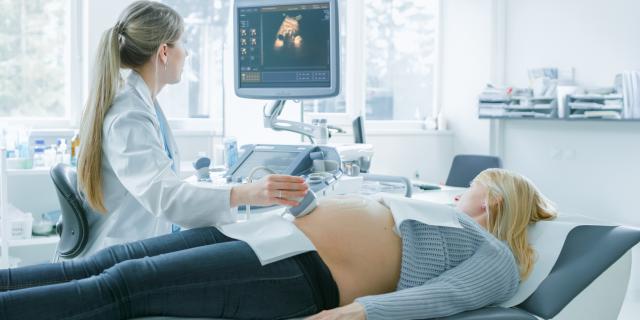
Cell division begins in the womb after fertilization. By the 4th week of pregnancy, the embryo develops and can be seen on an ultrasound by the 8th week at the latest. By the end of the first trimester, all vital organs have developed. The baby is already about 5 cm long. The heart beats at up to 160 beats per minute, and the baby begins to practice its first movements, even if these cannot yet be felt.
Initial symptoms usually subside: What happens during the second trimester (weeks 13 through 28 of pregnancy)?
For many women, the second trimester is the most comfortable phase of pregnancy. During this time, the belly grows steadily. During this phase of pregnancy, your baby’s development progresses by leaps and bounds:
- The fetus’s brain and nervous system begin to develop around the 13th week of pregnancy.
- Organ functions are maturing: the kidneys, intestines, and lungs are flushed with amniotic fluid through swallowing and breathing movements.
- The baby can already perceive light and pressure. The baby also reacts to sounds from the outside world.
Starting around the 18th week of pregnancy, many women can feel the baby’s first movements. An ultrasound may already be able to determine the baby’s sex.
By the 24th week of pregnancy, the embryo is about 30 cm long and weighs around 700 g. The unborn baby now responds to sounds with movements, can laugh, cry, recognize light sources, and also feel pain.
By the end of the second trimester, it is about 37 cm long and weighs around 1,200 g.
Preparing for Childbirth: What Happens During the Third Trimester (Weeks 29–40 of Pregnancy)?
In the last trimester of pregnancy, the belly grows significantly and everything becomes increasingly difficult. A pregnant woman’s weight increases steadily—typically by a total of 11 to 18 kilograms.
The uterus begins to press on the internal organs. This can cause symptoms such as:
- Heartburn
- Frequent urination
- Shortness of breath
- Due to the growing baby bump, sleeping is often only possible while lying on your side.
With the lungs now fully mature, all organs are fully functional by the 9th month. The baby’s wide-ranging movements become steadily less noticeable due to the increasing lack of space in the abdomen. Instead, the baby assumes the typical fetal position, pulling its legs and arms close to its body.
Toward the end of pregnancy, a full-term baby typically weighs between 2,800 and 4,200 grams and measures an average of 48 to 54 centimeters.
After about 40 long weeks, the baby is ready to see the light of day.
Every pregnancy is unique
Every pregnancy is unique, and every expectant mother experiences these nine months differently. Some changes occur earlier or later, and physical sensations and mood swings vary greatly from woman to woman.
The most important thing is: Trust your body and listen to your inner voice. If you’re unsure or worried about anything, seek support and advice from your midwife or OB-GYN.
Where can we find help and advice?
In addition to medical care, there are numerous counseling and support services available during pregnancy.
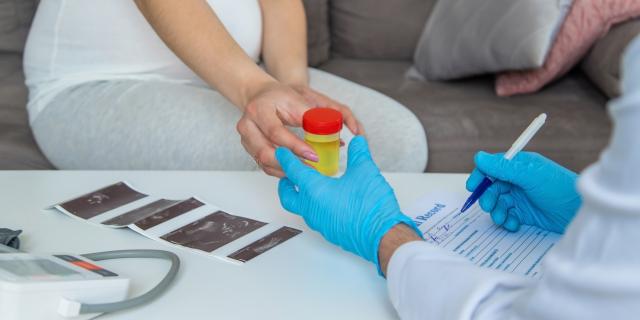
The gynecologist’s office is the first point of contact during pregnancy for prenatal care, questions about physical changes and symptoms, or assessments of how the pregnancy is progressing.
Midwives often provide counseling long before the birth and serve as important companions for expectant mothers throughout pregnancy.
Pregnancy and family counseling centers support expectant parents in emotionally stressful situations and with decision-making related to pregnancy and childbirth. Using the database of the Federal Institute for Public Health (BIÖG), you can find a pregnancy counseling center near you with just a few clicks. You can find information about general family counseling centers or local family offices through our Family Guides here on the Family Portal.
You Might Also Be Interested In

More Information Links for Further Reading

Local Services Local Activities for Families

Tips Download
