


Topsharing
How does shared leadership work?
"The synergy effects are very high."
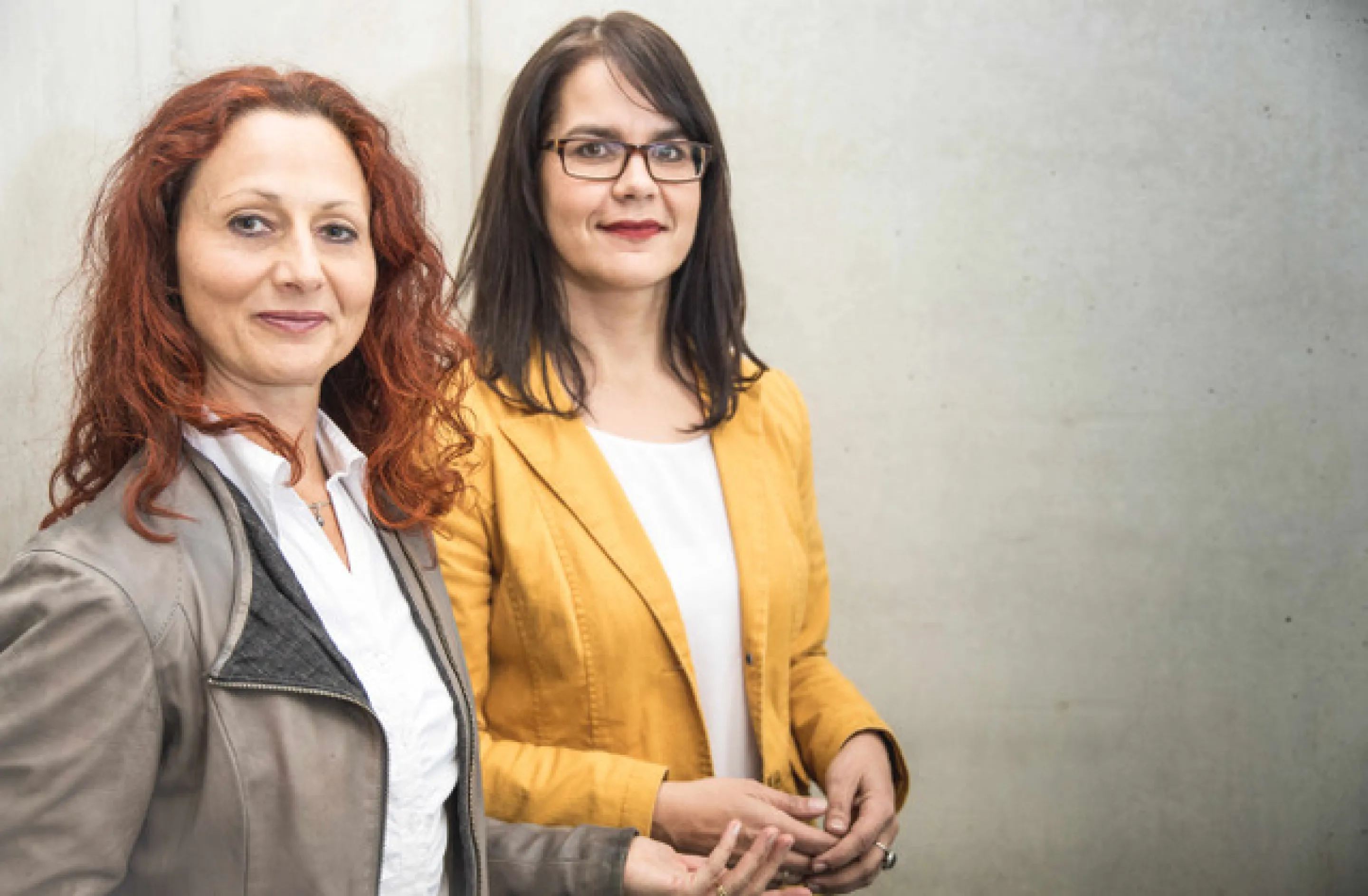
An interview with Katharina Wiench and Esther Himmen, experts in joint leadership.
Katharina Wiench and Esther Himmen help individuals and organizations to successfully put the concept of "top sharing" - i.e. sharing a management position - into practice. Their aim is to establish top sharing as a common working model and demonstrate the benefits, for example in terms of work-life balance. In this interview, they explain why employees who share a position achieve good results in companies.
Esther Himmen: In top sharing, two employees in management positions share a job in the company. Working in tandem can look very different. For example, employees can share a full-time position by each working part-time. However, they can also each have a full-time job and work in the same position if, for example, it is a job with very extensive tasks that would otherwise require overtime. It is also conceivable that employees only share a position for certain projects.
Katharina Wiench: If a company decides to offer a job-sharing position, our motto is: start at the top. The management should clarify important questions in advance: What are the consequences of the job-sharing working model? What needs to be considered? Who is affected and what are the general conditions? If you ask yourself these questions at an early stage and involve the entire management team, you are making the right start - because the introduction of job sharing also means a cultural change for the company.
Once the right tandem partners have been found, we recommend starting a pilot project lasting at least six to twelve months. This is the only way to test in practice what works and what doesn't.
Esther Himmen: In our study 'Topsharing. A study on interest in job sharing at management level', it became clear that employees are very interested in sharing models. Above all, job sharing can prevent unhealthy stress levels and overwork for employees and thus contribute to a better work-life balance and compatibility of family and career. This is not only possible with part-time models. Tandems in which both work full-time can also avoid excessive overtime by sharing a job.
Katharina Wiench: The synergy effects of tandems are also very high: two people with different experience and skills, who are also in close contact with each other, complement each other well and increase the productivity and quality of the results. Employees also have the opportunity to further develop themselves in exchange with their tandem partner. This ultimately benefits the company in particular.
Katharina Wiench: In contrast to large corporations, SMEs often have shorter decision-making processes. It is also easier in SMEs to really involve everyone in a restructuring and pilot projects (e.g. for job and top sharing) can have a greater impact. Smaller companies are generally simply more flexible.
Where can we find help and advice?
The Federal Ministry of Labor and Social Affairs' New Quality of Work Initiative offers coaching and advice for small and medium-sized companies. Up to 80 percent of the costs can be covered. You can use the INQA coaching map to find an advice center near you: https://www.inqa.de/DE/handeln/inqa-coaching/inqa-coaching-karte/uebersicht.html
