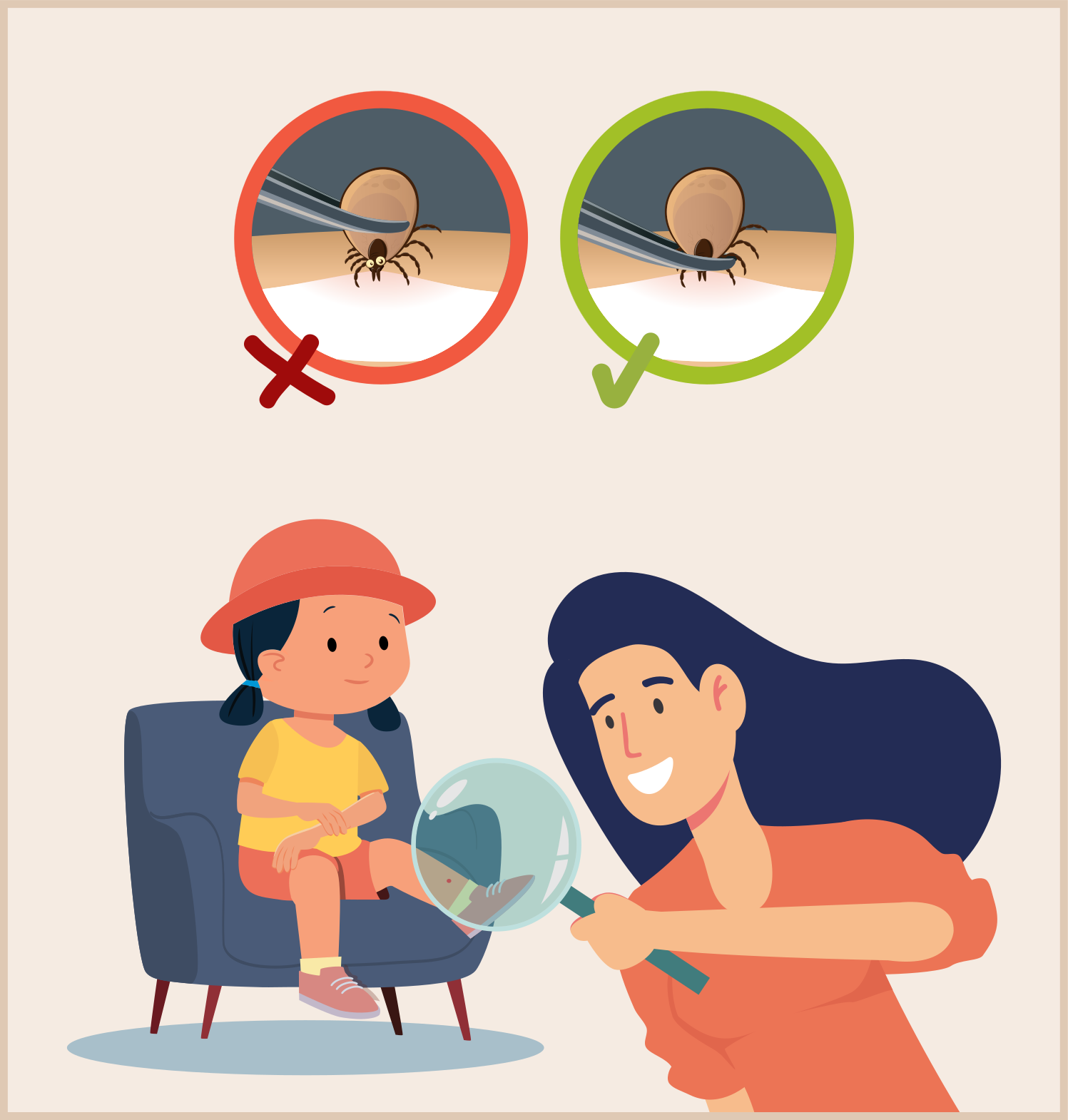
- Remove the tick as quickly as possible using tick tweezers, a tick card, or regular tweezers.
- Important: Avoid crushing or twisting the tick. Doing so could cause the tick’s body to burst, allowing bacteria to enter your child’s body.
- Therefore, grasp the tick by the head, as close to the skin as possible, and slowly pull it out.
- It’s best to mark the bite site with a ballpoint pen and watch to see if any skin changes, such as redness, develop there over the next few days. If this happens, or if you develop a fever or pain as a result of a tick bite, you should see a doctor.
Tick Protection
Everything You Need to Know About Tick Protection at a Glance
- Ticks can transmit diseases such as Lyme disease and TBE.
- A vaccine protects against TBE. It is especially recommended in high-risk areas.
- There is currently no vaccine against Lyme disease, so prevention is especially important.
- Protect your child by having them wear long sleeves and pants, using insect repellent, and checking their body thoroughly after spending time outdoors.
- If you find a tick, remove it as quickly and carefully as possible.
- Monitor the bite site and see a doctor if redness, fever, or other symptoms develop.

Warning: Tick Alert!
As the warm season arrives, ticks become active again. Children, in particular, love to spend a lot of time outdoors. This increases the risk of being bitten by a tick in the yard, on playgrounds, or in the woods.
A tick bite can transmit pathogens such as Lyme disease bacteria or TBE viruses. Read here to learn what you need to know about vaccination, what to do after a tick bite, and what options are available to protect your child from the consequences.
What health risks are associated with ticks?
These nasty little bloodsuckers usually lurk in tall grass or bushes and attach themselves to your skin as you walk by. Once attached, they can transmit pathogens such as Lyme disease or TBE (tick-borne encephalitis). But not every tick causes an illness; nevertheless, caution is advised. This makes it all the more important to know how these illnesses manifest and how to protect yourself from them.
Lyme disease
Lyme disease is often difficult to recognize. It is transmitted by bacteria that are widespread throughout Germany, including North Rhine-Westphalia. The disease can go unnoticed or take a wide variety of courses.
A typical sign of the disease is erythema migrans. This circular rash appears around the bite site, sometimes not until weeks after the actual tick bite.
Other symptoms may include:
- Fever and night sweats
- Joint and muscle pain
- Fatigue
- Swollen lymph nodes
Symptoms often do not appear until several weeks after the tick bite. If Lyme disease is detected early, it can be effectively treated with antibiotics, thereby preventing long-term complications. There is currently no vaccine available.
TBE (Tick-Borne Encephalitis)
TBE is a viral infection that can lead to inflammation of the meninges and spinal cord. The virus is found primarily in certain high-risk areas—mainly in southern Germany.
Typical symptoms resemble those of the flu, including fever, headache, and body aches. In most cases, the symptoms subside on their own, and there is no second phase of the illness. However, especially in adults, the disease can take a more severe course, leading to long-term effects such as fatigue, headaches, difficulty concentrating, or paralysis.
Only the symptoms, such as fever or pain, can be treated. The pathogen itself cannot be combated. However, there is an effective vaccine available to prevent TBE.
TBE: Should I get my child vaccinated?
Vaccination is considered the most effective protection against the consequences of TBE infection. This applies to everyone who spends a lot of time outdoors and is particularly important for young children, since they enjoy playing outdoors frequently and usually close to the ground.
The “Standing Committee on Vaccination” (STIKO) recommends vaccination, especially if you live in a so-called risk area or plan to vacation there. You can view a map of tick-risk areas at the Robert Koch Institute. This makes it easier for you to assess the risk.
The TBE vaccine is considered well-tolerated. STIKO recommends it as the safest protection against tick-borne encephalitis (TBE) for children as young as 12 months. There are two approved vaccines. A possible side effect in children is a fever that may last for a few days. This side effect decreases as children get older.
Important to know: Three doses are required to build long-term protection. Protection begins after the second dose. A booster shot should be administered approximately every 5 years. The vaccinations are typically administered over a period of twelve months. If necessary, it is possible to achieve full vaccine protection within five weeks.
The Federal Institute for Public Health (BIÖG) recommends that parents seek advice from their pediatrician’s office and weigh the risks and benefits with a healthcare professional.
Who covers the cost of the vaccination?
The cost of a TBE vaccination ranges from 30 to 50 euros. If you live in a “high-risk area,” your health insurance will cover the cost of the vaccine. This may also apply if you plan to vacation in a high-risk region. It’s best to check with your health insurance provider before your trip.
The best preventive measure is to avoid tick bites as much as possible
A tick vaccine is only effective against TBE; there is no vaccine available for borreliosis. That is why you should protect your child from tick bites whenever possible. These tips can help:
-
Appropriate Clothing
Make sure your child wears appropriate clothing: Long pants and long-sleeved tops that fit snugly can help keep ticks from getting onto your child's skin. It's best to pull the socks over the pants.
-
Light-colored clothing
If your child wears light-colored clothing, ticks are easier to spot.
-
Sturdy Shoes
Your child should wear sturdy shoes that are closed on all sides.
-
Regular checks
If your child has been outside, you should check them regularly for ticks, especially after a trip to areas with dense vegetation. Pay special attention to areas such as the scalp, neck, armpits, navel, groin, and behind the ears.
-
Prevention
You can also take preventive measures by using insect-repellent lotions. Apply the product to your child's exposed skin. Please follow the manufacturer's instructions and check whether the product is suitable for your child's age.
-
Monitoring Pets
Don't forget to check your pets for ticks. Ticks that haven't yet attached themselves can easily transfer from the pet to the child.
What should I do if my child has been bitten by a tick?
Where can we find help and advice?
If you have questions about tick prevention and vaccination, please contact your pediatrician’s office.
Information on the TBE vaccine is available on the website of the Federal Institute for Public Health (BIÖG).
Answers to frequently asked questions about ticks, tick bites, and infection can be found on the Robert Koch Institute’s website.